Real Work
Installation in Progress
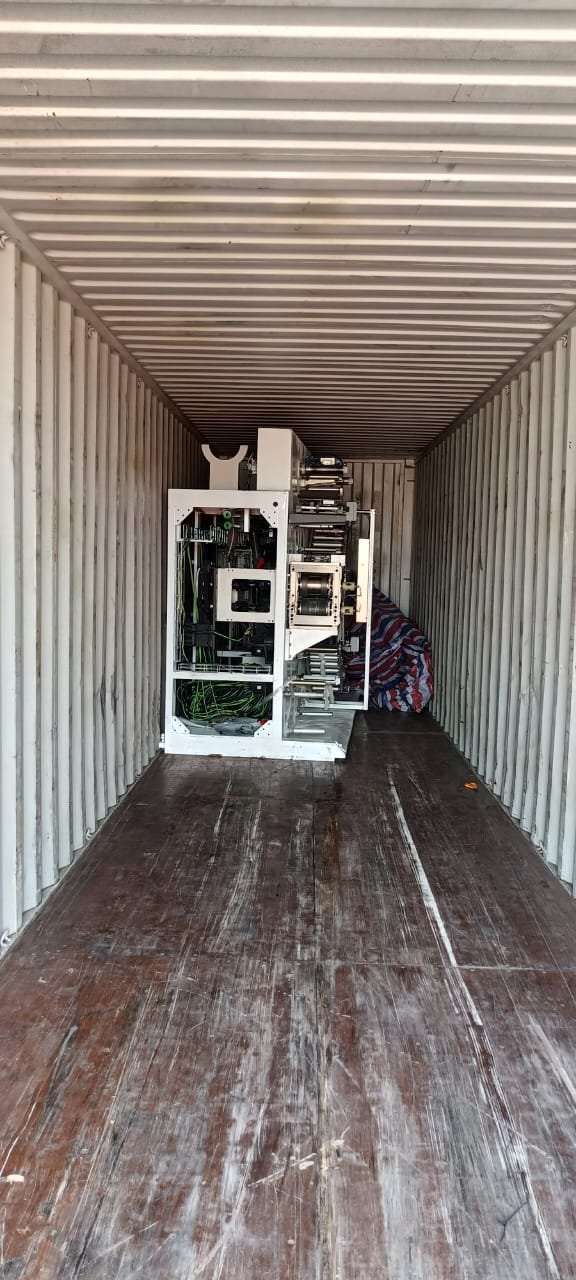
Real photos and videos from an actual sanitary napkin machine installation — not stock images.
Before sending money to a supplier in China for a sanitary napkin machine or plant, most Indian buyers search for the same things — is the factory real, what should the machine specs be, what documents are needed, and how much will customs cost. This guide covers all of it in one place.
Real photos and videos from an actual sanitary napkin machine installation — not stock images.
Before committing to a Chinese supplier, most first-time buyers are quietly trying to answer the same handful of questions:
One of the most common issues Indian buyers run into is dealing with a trading company that presents itself as a manufacturer. Trading companies add a markup, can't always answer detailed technical questions, and have less accountability if something goes wrong with the machine. Before you pay any advance, it's worth confirming who you're actually dealing with.
Specification confusion is one of the biggest sources of disappointment after a machine arrives. Before you commit, get clarity on the following, in writing:
Confirm whether the machine is mechanical, semi-servo or fully servo-driven. Suppliers sometimes use "automatic" loosely — ask specifically which stations use servo motors and which are mechanically driven, since this materially affects precision, output consistency and price.
A supplier's claimed maximum output (pieces per minute) is often a best-case lab figure. Ask for realistic sustained output under normal factory conditions, and if possible, ask for video proof of the machine running continuously, not just a short demo clip.
Since servo motors and drives are a major cost and reliability factor, ask which brand of servo components is used. Well-known component brands are generally easier to source spare parts for later, which matters once the machine is running in India.
Confirm the machine is compatible with the raw materials (wood pulp or airlaid core, non-woven fabric, back sheet film) that are realistically available to you in India, rather than only materials the supplier sells.
Importing machinery into India involves standard trade documentation. Having these confirmed and correct before shipment avoids costly delays at customs:
The price quoted by a Chinese supplier is rarely the full cost of getting the machine running in India. Before budgeting, account for these additional cost heads:
These patterns come up again and again with first-time Indian buyers importing machinery from China.
How you pay matters almost as much as who you pay. A few practical habits reduce risk significantly:
Once your machine clears customs and reaches your city, the next stage is installation and commissioning — checking every component survived shipping, aligning the machine, connecting power, and running trial batches before full production. This is a separate step from sourcing, and it's where a lot of the practical issues from a China purchase (missing parts, wiring mismatches, unfamiliar servo settings) actually surface.
We offer installation and commissioning support for new, used and China-sourced machines — mechanical, semi-servo or fully servo — across major Indian cities. See our city-wise installation service or use the installation cost calculator to get a sense of what that stage involves.
Want a second opinion before you pay a Chinese supplier? Share the supplier's quotation and specifications with us on WhatsApp and we'll help you review it before you commit.
It can be, but it carries more risk than buying locally since you can't easily inspect the machine in person. Safety mainly comes down to verifying the supplier is a real manufacturer (not just a trading company), checking specifications carefully, using safer payment methods, and getting everything in writing before you pay in full.
Ask for a live video call walkthrough of the factory floor, request their business license and export credentials, check if their address matches an actual industrial zone, and look for consistency between what they show you and what they claim. Trading companies often can't do a live factory walkthrough or answer detailed technical questions confidently.
Typically a Proforma Invoice, Commercial Invoice, Packing List, Bill of Lading or Airway Bill, and Certificate of Origin. Depending on the machine and your import category, additional compliance documents may be needed — confirm the exact list with your customs house agent (CHA) before shipment.
Duty rates depend on the machine's HSN classification and current customs policy, which changes from time to time. We recommend confirming the exact applicable rate with a licensed customs agent before finalising your budget, rather than relying on a general estimate.
Paying 100% upfront is generally considered risky. A common approach is a partial advance to confirm the order and the balance closer to shipment, ideally routed through a platform with trade assurance or buyer protection rather than a direct bank transfer to an unverified account.
Yes, we offer consultation to help Indian entrepreneurs evaluate suppliers, review specifications and avoid common mistakes before committing to a purchase. Message us on WhatsApp with your requirement to get started.
Share the quotation and specifications with us on WhatsApp — we'll help you review it and flag anything that looks off.
Chat on WhatsApp