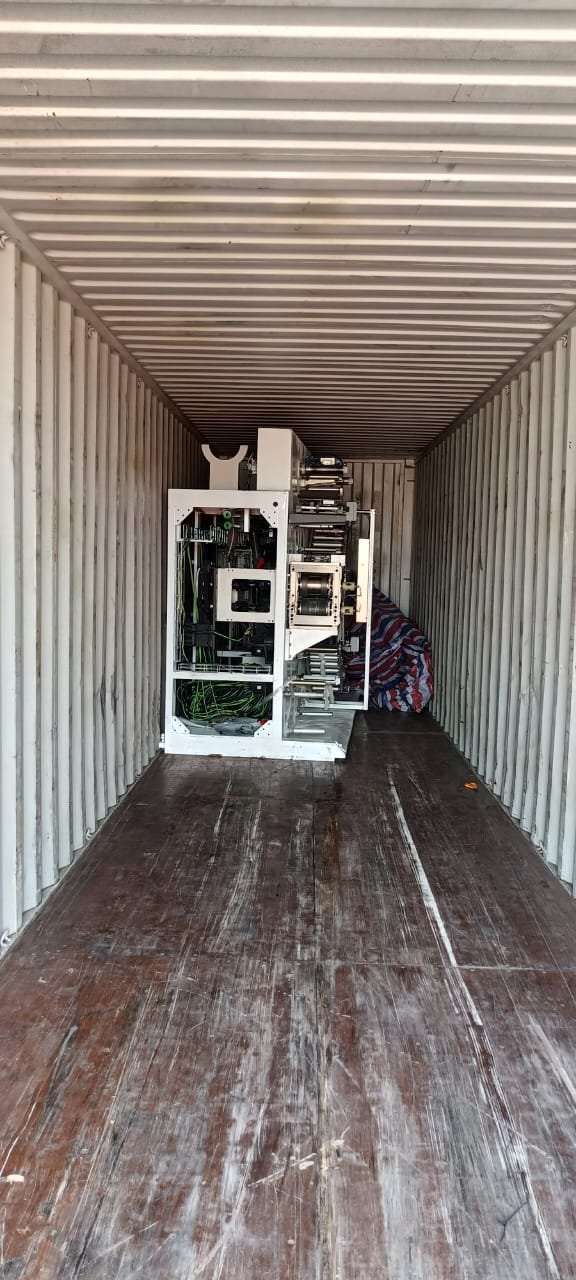
Real Work
Installation in Progress
Real photos and videos from an actual sanitary napkin machine installation — not stock images.
Searching for an "automatic" sanitary napkin machine? The term covers a range — from semi-automatic to fully automatic lines. We explain the difference and install the right one for you anywhere in India.
Real photos and videos from an actual sanitary napkin machine installation — not stock images.
"Automatic" is one of the most loosely used words in the sanitary napkin machine market. Some sellers use it to mean the machine is fully servo-driven end-to-end; others use it for a machine where only a few stations are automated and the rest still need manual feeding or intervention. Because there's no strict industry standard enforcing the term, the only reliable way to know what you're actually buying is to ask for a station-by-station breakdown — core-forming, wrapping, cutting, sealing — and confirm which of those are automated versus manual.
Automatic machines — whether semi or fully — generally need stable three-phase power and proper earthing, since automated stations rely on motors and controllers that are more sensitive to power quality than manual equipment. Commissioning includes calibrating each automated station and, for fully automatic lines, configuring or verifying PLC settings before a gradual trial run. Operator training is especially important here — running an automated line safely and efficiently is a different skill from running a manual or shaft-type machine, and untrained operators are the most common cause of early breakdowns.
Usually, a fully automatic sanitary napkin machine is servo-driven. But "automatic" is used loosely in the market — always ask exactly which stations are automated before assuming it matches a servo specification.
A semi-automatic machine automates some stations (often via semi-servo motors) while others need manual feeding or intervention. A fully automatic machine automates the full process end-to-end with minimal manual involvement.
Ask for a station-by-station breakdown of what's automated versus manual, and request a video of the machine running a full production cycle rather than relying on the listing description alone.
Generally yes — automatic (servo or semi-servo) machines typically need three-phase power and stable voltage, compared to some smaller manual or shaft-type machines that can run on single-phase supply.
It depends on the specific machine's design — some allow adding servo stations later, others don't. We can advise on feasibility once we know the make and model.
Tell us your location and machine details on WhatsApp — we'll guide you through the next steps.
Chat on WhatsApp