Real Work
Installation in Progress
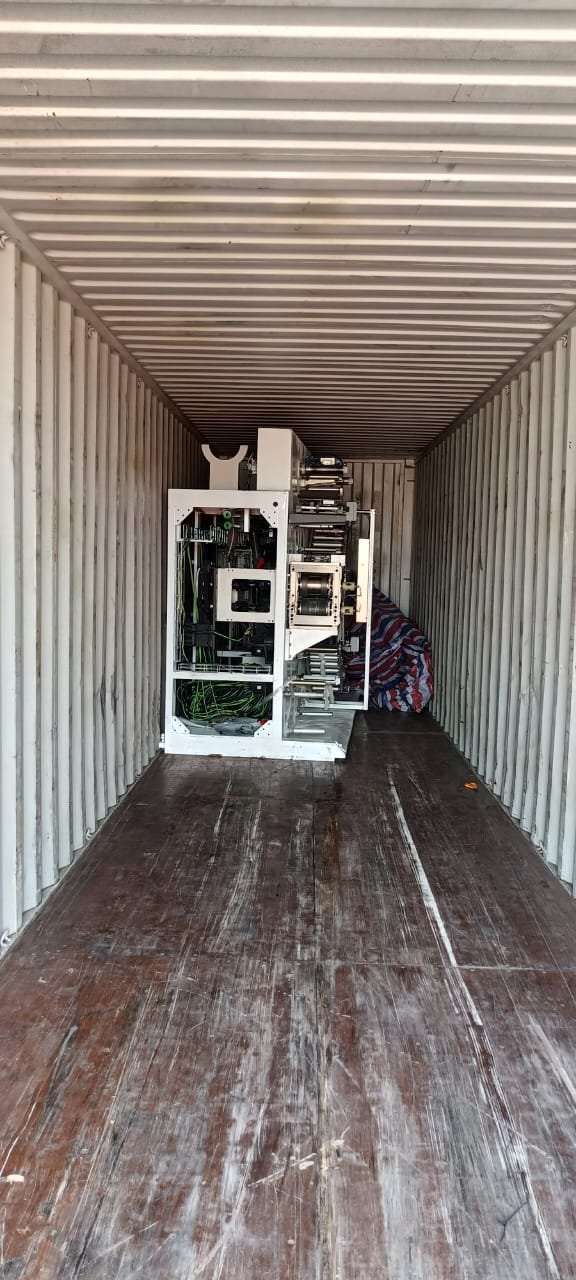
Real photos and videos from an actual sanitary napkin machine installation — not stock images.
Installing a servo-driven sanitary napkin machine — new, used or sourced from China? We handle on-site installation, servo calibration and operator training anywhere in India.
Real photos and videos from an actual sanitary napkin machine installation — not stock images.
A servo sanitary napkin machine uses servo motors — instead of fixed mechanical cams and shafts — to control motion at each production station: core-forming, wrapping, cutting and sealing. Each servo motor is driven through a PLC (programmable logic controller) panel, letting you adjust speed and timing digitally rather than through mechanical linkage. In the market, these are commonly sold as "fully automatic" machines, though the exact number of servo-controlled stations can vary supplier to supplier.
Servo machines need more careful commissioning than mechanical ones. Each servo drive has to be correctly calibrated for its station, and PLC settings need to be configured (or transferred, if pre-set by the supplier) before the machine can run at its intended speed safely. Power supply stability and proper earthing are critical — voltage fluctuations that a mechanical machine would shrug off can trip or damage servo drives. We also run a gradual trial-run tuning process, bringing the machine up to rated speed step by step rather than starting at full output on day one.
It means servo motors — not fixed mechanical cams — control motion at each production station, giving precise, programmable control over speed and timing through a PLC panel.
In the market, a fully servo-driven machine is usually what's sold as "fully automatic". But the word "automatic" is used loosely by some sellers, so always confirm which stations are actually servo-controlled before buying.
Yes, we install and commission servo machines regardless of where they were sourced, including ones imported from China. We also offer consultation before you buy if you haven't purchased yet.
Servo drives are more sensitive to voltage fluctuation and earthing quality than mechanical machines. We check your site's power supply and earthing as part of the installation process before commissioning.
This is why confirming the servo brand and local spare-part availability before you buy matters. We can advise on troubleshooting and help you source replacement parts where possible.
It depends on budget and production goals. Mechanical (shaft-type) machines are cheaper and simpler to maintain locally; servo machines cost more but give better consistency and speed control. We can help you weigh this based on your specific plan.
Tell us your location and machine details on WhatsApp — we'll guide you through the next steps.
Chat on WhatsApp